
Your refrigerator is working harder right now than it does at any other point in the year. The moment outdoor temperatures in West Texas climb past 95°F, the cooling system inside your fridge is fighting harder than it was engineered to do under normal conditions. For many Abilene homeowners, summer is precisely when the refrigerator stops keeping food cold—and that is not a coincidence.

A refrigerator that suddenly stops cooling in July or August is not just an inconvenience. It is a race against time. A full refrigerator that drops below the safe threshold of 40°F can begin spoiling food in as little as two hours, and in an Abilene summer, that window gets even shorter.
This guide breaks down exactly why refrigerators fail during peak heat, what each symptom points to, what you can safely check yourself, and when a repair technician needs to step in.
How a Refrigerator Actually Keeps Food Cold
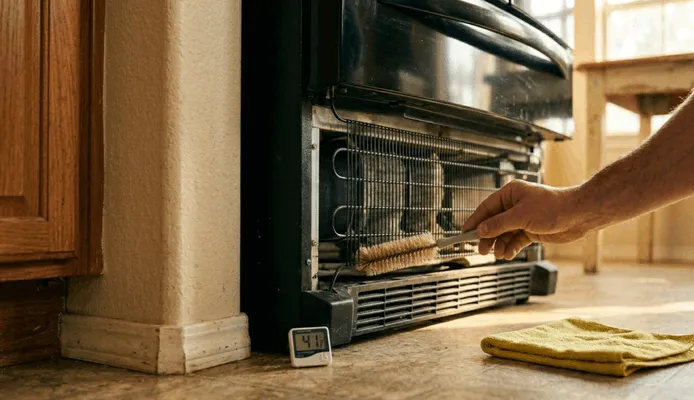
Before jumping into causes, it helps to understand how the cooling process works. Your refrigerator does not generate cold air. It removes heat from inside the cabinet and dumps it into the room around it.
This process runs on four key components working in sequence: the compressor, the condenser coils, the evaporator coils, and the refrigerant that circulates between them. The compressor pressurizes the refrigerant, which then flows through the condenser coils and releases heat into the kitchen. It then moves through the evaporator coils inside the freezer, absorbs heat from the interior, and the cycle starts again.
Two fans support this process. The condenser fan keeps air flowing over the condenser coils at the back or bottom of the unit. The evaporator fan circulates the cold air produced at the evaporator coils through both the freezer and refrigerator compartments.
When summer heat strikes, every single one of these components is forced to work at a higher load. The kitchen ambient temperature rises, heat rejection becomes less efficient, and the compressor cycles more often. That is the foundation of why summer is peak season for refrigerator breakdowns.
Reason 1: Dirty Condenser Coils Overloaded by Summer Heat
This is the single most common cause of refrigerators losing cooling performance during summer, and it is one of the few things a homeowner can address without calling a technician.
Condenser coils are responsible for releasing the heat that was pulled from inside your refrigerator. When those coils are coated in dust, pet hair, and debris, heat cannot escape efficiently. The refrigerant passes through without shedding enough warmth, so it returns to the evaporator coil already warmer than it should be. Cooling capacity drops.
In a mild winter kitchen at 65°F, mildly dirty coils might not cause visible problems. In an Abilene kitchen at 85°F or higher during summer, even a moderate layer of dust on the coils can tip the system into failure. The compressor overheats, runs continuously, or shuts down entirely to protect itself.
What to check: Pull your refrigerator away from the wall. On most models, the condenser coils are located at the bottom front behind a grille or along the back panel. You will likely see a noticeable layer of dust, lint, or debris.
What to do: Use a vacuum cleaner with a brush attachment or a dedicated appliance coil brush to gently clean the coils. Avoid bending them. Once clean, restore power and give the unit a few hours to stabilize.
How often to clean: In West Texas conditions, every three to four months is the right schedule. Standard guidance says every six to twelve months, but the dust and wind in Taylor County accelerate the buildup significantly.
Reason 2: The Condenser Fan Has Failed or Is Obstructed
The condenser fan sits beside the compressor at the rear base of the refrigerator and pulls air across the condenser coils to keep them from overheating. When the ambient temperature in your kitchen is already elevated in summer, this fan becomes even more critical. Even a partially obstructed or slowed fan motor can push the compressor over its thermal limit.
A failed condenser fan is different from dirty coils in one key way: the symptom appears faster. You may notice the refrigerator going warm within 24 to 48 hours of the fan failing, and the exterior cabinet near the bottom will feel unusually warm to the touch.
What to check: Unplug the refrigerator. Access the condenser fan through the rear access panel near the bottom. Try spinning the fan blade by hand. It should rotate freely with very little resistance. If it is stiff, seized, or wobbles, the motor is failing.
What to do: A failed condenser fan motor requires replacement. This is a repair a technician can typically complete in a single visit, and OEM-compatible parts are available for virtually every major brand, including Whirlpool, LG, Samsung, GE, and Maytag.
Reason 3: The Evaporator Fan Is Failing or Blocked by Ice
The evaporator fan lives inside the freezer compartment and is responsible for one of the most misunderstood symptoms homeowners experience: the freezer stays cold, but the refrigerator section goes warm.
This specific symptom, a cold freezer with a warm refrigerator, almost always traces back to the evaporator fan or the air damper that controls airflow between the two compartments. When the evaporator fan fails, cold air stops circulating into the refrigerator section, even though the freezer continues to receive it directly.
Summer heat can accelerate this failure because the fan is running more often due to greater demand on the system.
What to check: Open the freezer door and listen for the fan running. Open the refrigerator door and place your hand near the back vent openings. You should feel cool air flowing through. If there is no airflow, the evaporator fan may have failed.
What to do: If you hear a squealing or grinding noise from the freezer, the evaporator fan motor is likely worn out. Replacement requires removing the interior freezer panel. While technically possible as a DIY project, it involves accessing and reconnecting wiring harnesses and fan brackets, which is where most homeowners call a professional.
Reason 4: The Door Gasket Is Letting Warm Summer Air In
The door gasket is the rubber seal that runs along the perimeter of the refrigerator and freezer doors. Its entire job is to create an airtight barrier between the cold interior and the warm kitchen. In summer, the temperature differential across that gasket is far greater than in winter, which means even a small gap causes a dramatically higher rate of warm air infiltration.
A degraded or warped gasket forces the compressor to run almost continuously, trying to compensate for the steady intrusion of warm air. Over weeks, this accelerated compressor load leads to premature wear, higher energy bills, and eventually, a refrigerator that cannot maintain safe food storage temperatures even with the compressor running nonstop.
What to check: Close the refrigerator door on a thin piece of paper or a dollar bill. Pull it. You should feel resistance. If it slides out easily, the gasket is not sealing properly. Repeat this test in multiple positions around the door perimeter.
What to do: If the gasket is simply dirty, cleaning it with warm soapy water and drying it thoroughly can restore flexibility and improve the seal. If the gasket is cracked, stiff, torn, or permanently deformed, it needs to be replaced. Gasket replacement is a relatively affordable repair, and the improvement in efficiency is usually immediate and measurable.
Reason 5: Frost-Blocked Evaporator Coils from a Failed Defrost System
Your refrigerator has an automatic defrost system that periodically heats the evaporator coils just enough to melt any accumulated frost before it builds up into a solid block. This cycle runs automatically, usually once or twice every 24 hours, and is controlled by a defrost timer, defrost heater, and defrost thermostat working together.
When any one of these three components fails, frost accumulates on the evaporator coils unopposed. Over a few days, the frost builds into a thick layer that completely blocks airflow across the coils. The refrigerator goes warm even though the compressor is running perfectly fine.
This failure happens year-round, but in summer it causes faster food spoilage because ambient kitchen temperatures are higher, giving the refrigerator less margin for error.
What to check: Remove the panel inside the freezer compartment. If the evaporator coils are encased in a thick layer of frost or ice, a defrost system component has failed.
What to do: You can manually thaw the coils by unplugging the refrigerator and leaving the freezer door open for 24 to 48 hours. This will restore cooling temporarily, which confirms the diagnosis. However, the underlying component (timer, heater, or thermostat) must be identified and replaced for a permanent fix. A technician can test each component and replace only the faulty one.
Reason 6: A Failing or Overworked Compressor
The compressor is the heart of the refrigeration system. It pressurizes the refrigerant and drives the entire cooling cycle. Compressors are built to operate within specific ambient temperature ranges, and during an Abilene summer when garage temperatures exceed 100°F or kitchen temperatures climb well above the national average, a compressor that is already aging can fail under the additional load.
Compressor failure is the most serious and most expensive cause on this list. Signs include the refrigerator running constantly without getting cold, clicking noises when the unit tries to start, the compressor feeling hot to the touch, or complete silence from the unit when you would normally hear it cycling.
Refrigerant leaks fall into this same category of sealed system problems. A refrigerant leak gradually reduces cooling efficiency over weeks, and the pattern is a refrigerator that gets progressively worse rather than failing suddenly overnight.
What to do: Compressor repair and refrigerant system work require EPA-certified technicians and specialized equipment. This is not a DIY repair under any circumstances. If you suspect compressor failure, a technician will perform a diagnostic to confirm it and advise you on whether repair or replacement makes better financial sense based on the age of the unit and the cost of the compressor.
Reason 7: Refrigerator Placement Working Against It in Summer
This is the cause that nobody thinks about, and it quietly shortens the life of compressors and condenser coils every summer across Abilene.
If your refrigerator is positioned against a wall with no clearance behind it, sitting beside an oven or range, placed in a garage, or receiving direct afternoon sunlight through a nearby window, it is fighting the ambient heat with one hand tied behind its back. The surrounding environment directly impacts how efficiently the condenser can reject heat.
A refrigerator that runs perfectly fine in a climate-controlled kitchen at 72°F may struggle noticeably in a west-facing kitchen that reaches 85°F by mid-afternoon.
What to do: Ensure there is at least one to two inches of clearance on the sides and at least two inches at the rear of the unit for airflow. Keep it away from heat-generating appliances. If it is in a garage or utility room that is not air-conditioned, cooling performance in summer will be limited regardless of how well the unit is maintained.
What Safe Refrigerator and Freezer Temperatures Look Like
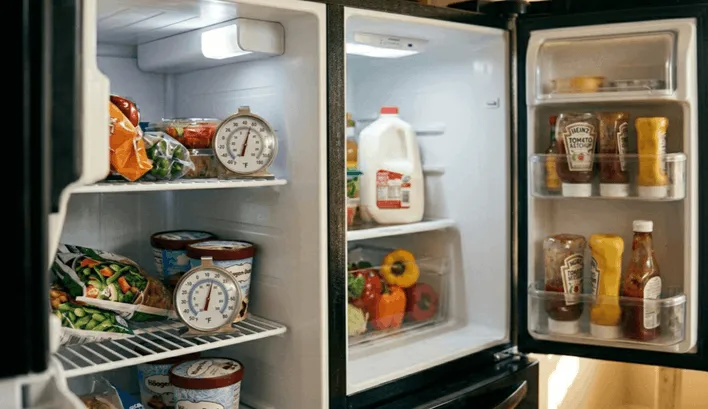
The U.S. Food and Drug Administration recommends keeping the refrigerator compartment at or below 40°F and the freezer at 0°F. A thermometer placed inside the refrigerator (not relying on the display panel) will give you the most accurate reading. If interior temperatures are climbing above 40°F and staying there, food safety is at risk, and the issue needs to be addressed promptly rather than monitored.
Quick Diagnostic Guide: What Your Symptom Likely Means
Understanding which symptom you are dealing with narrows down the repair significantly.
Freezer cold, refrigerator warm: Almost always the evaporator fan or the air damper between the two compartments. Sometimes frost-blocked evaporator coils.
Both compartments are warm, and the compressor is running: most likely dirty or blocked condenser coils or a failed condenser fan. Could also be a refrigerant leak if the cooling loss has been gradual.
Both compartments are warm, and the compressor is not running. Compressor failure, start relay failure, or a control board issue. Requires professional diagnosis.
Refrigerator cycling on and off rapidly: Overheating compressor, often from dirty coils or a failed condenser fan in summer conditions.
Refrigerator running constantly without getting cold: a failing door gasket, severely dirty coils, a failing compressor, or a refrigerant leak.
Frost accumulation inside freezer, warm refrigerator: Defrost system failure requiring component testing and replacement.
Which Fixes Can You Do Yourself and Which Need a Technician?
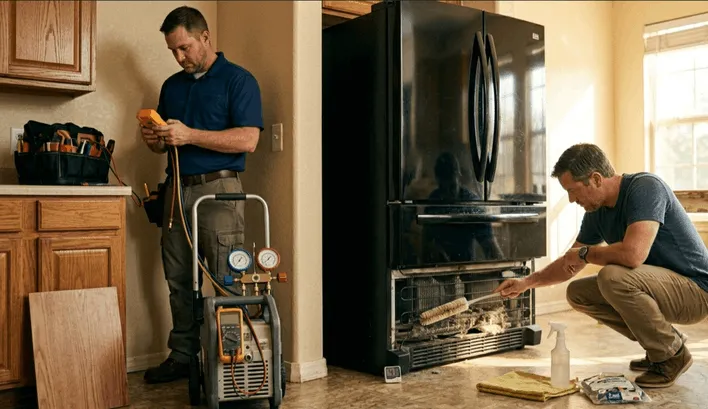
There is a clear line between what a homeowner can safely handle and what requires a certified appliance repair technician.
You can safely clean condenser coils, test and clean door gaskets, check temperature settings, clear air vents inside the refrigerator, and manually thaw a frost-blocked evaporator as a temporary diagnostic step.
You need a professional technician for anything involving the evaporator fan motor, condenser fan motor replacement, defrost system component diagnosis and repair, control board replacement, compressor evaluation, and any sealed system work involving refrigerant.
Attempting sealed system repairs without certification is illegal under EPA regulations and dangerous without the proper recovery equipment.
How Much Does Refrigerator Repair Cost in Abilene, TX?
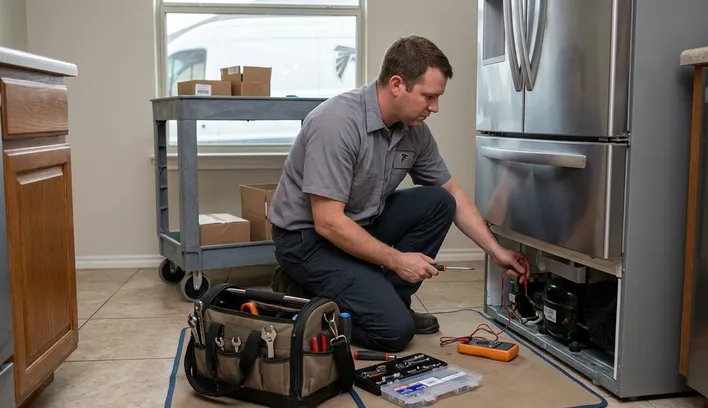
Repair costs vary significantly based on which component has failed. Cleaning condenser coils as a service call is among the most affordable repairs. Gasket replacement is typically a low- to moderate-cost repair with immediate benefits. Evaporator and condenser fan motor replacements are mid-range repairs that pay for themselves in avoided food spoilage alone. Defrost system component repair falls in a similar range. Compressor replacement is the most expensive repair and the one where age and replacement cost comparisons matter most.
A certified Abilene appliance technician will always provide a written estimate before beginning any work, so you understand the full cost before committing to a repair.
When to Repair and When to Replace
The 50/50 rule is the most practical guideline for this decision. If your refrigerator has reached more than half its expected lifespan (typically 13 to 15 years for most brands) and the repair cost exceeds half the price of a new comparable unit, replacement is often the smarter long-term investment. If the unit is under seven or eight years old, repair is almost always the better financial choice.
A good technician will give you an honest assessment rather than pushing you toward an unnecessary repair. At Falcon Appliance Services, honesty is part of every service call.
Prevent This From Happening Every Summer
The best time to prevent a refrigerator breakdown in July is April or May. A few simple habits extended across the year will dramatically reduce the likelihood of a heat-season failure.
Clean the condenser coils every three to four months, not just annually. Test the door gaskets in spring before temperatures peak. Make sure the refrigerator has adequate clearance on all sides. Replace the water filter on schedule to keep the ice maker and water dispenser functioning without added strain. And if your refrigerator is older than ten years and has never been serviced, a professional tune-up before summer can identify a failing component before it becomes an emergency.
Need Refrigerator Repair Right Now?
If your refrigerator has stopped cooling and you cannot afford to lose a week of groceries in a West Texas summer, Falcon Appliance Services is available 24 hours a day, 7 days a week for emergency appliance repair throughout Abilene and surrounding communities, including Potosi, Buffalo Gap, Wylie, Elmwood, and Elm Creek.
Our certified technicians arrive with the parts and equipment to diagnose and repair most refrigerator problems in a single visit. Every repair is backed by a written warranty on parts and labor, and you receive a clear written estimate before any work begins.
Call (325) 399-6710 any time or book a service appointment through our contact page. When your refrigerator fails in the heat of an Abilene summer, fast and reliable refrigerator repair makes the difference.
Frequently Asked Questions
Why does my refrigerator stop cooling only in summer? Summer heat increases the workload on every component of the cooling system, particularly the compressor and condenser coils. Existing problems that were borderline in cooler months are pushed over the threshold by the added thermal load of higher ambient kitchen temperatures.
How long does it take for a refrigerator to cool back down after being repaired? After a repair or reset, most refrigerators take four to six hours to reach their target temperature and up to 24 hours to fully stabilize. Avoid opening the door frequently during this period.
Can I run my refrigerator in a hot garage in Abilene summers? Most standard refrigerators are rated to operate in ambient temperatures up to around 110°F, but performance degrades meaningfully above 90°F. Consistent 100°F+ garage temperatures in Abilene summers will shorten the compressor lifespan and reduce cooling efficiency noticeably.
Is a refrigerator running constantly in the summer normal? Some increase in compressor cycling time during hot summer months is normal. A compressor that runs without stopping for more than a few hours without the interior reaching its target temperature indicates a problem that needs attention.
What temperature should my refrigerator be set to in summer? The recommended safe temperature for the refrigerator compartment is 37°F, and the freezer should be set to 0°F. These settings remain the same year-round. The difference in summer is that achieving and maintaining those temperatures requires more compressor effort.