
Your refrigerator is telling you something. The clicking that woke you up at 2 a.m., the hum that has gotten noticeably louder over the past week, the rattle that starts every time the compressor kicks on — these sounds are not random. Every unusual noise a refrigerator makes points to a specific component, and knowing which one can mean the difference between a $15 part and a $600 repair bill.
This guide walks you through every major refrigerator noise pattern—clicking, humming, rattling, buzzing, grinding, and squealing—explains exactly what is causing each one, and tells you which situations you can investigate yourself and which ones require a certified technician before the problem gets worse.
First: Not Every Refrigerator Noise Is a Problem
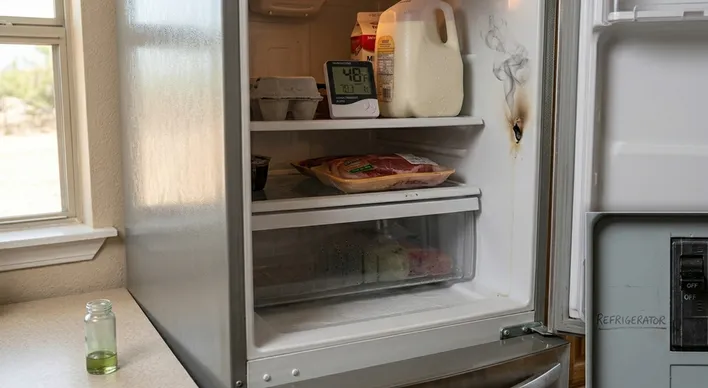
Before you pull the unit away from the wall, it helps to know what sounds are completely normal. Modern refrigerators are significantly more active acoustically than older models because they run more efficiently, with shorter cooling cycles rather than long, infrequent ones.
Normal refrigerator sounds include a soft, steady hum from the compressor and condenser fan during cooling cycles, a gurgling or bubbling sound as refrigerant moves through the evaporator coils, occasional cracking or popping as plastic interior panels expand and contract with temperature changes, a whooshing sound when the evaporator fan circulates cold air through the cabinet, and a single click when the thermostat signals the compressor to turn on or off.
The moment any of these sounds becomes noticeably louder, more frequent, or is accompanied by a drop in cooling performance, you are no longer in normal territory. That is where this guide picks up.
Refrigerator Making a Clicking Noise
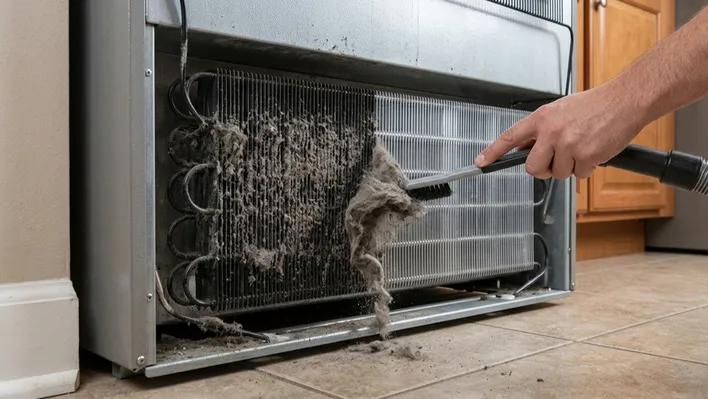
Clicking is the noise that worries homeowners most, and with good reason. The source of clicking determines whether you are looking at a $20 fix or a conversation about whether the refrigerator is worth repairing.
The Start Relay: The Most Common Clicking Culprit
The start relay is the most common cause of repetitive clicking in refrigerators. This small device is attached to the compressor and provides the initial electrical boost needed to start the compressor motor.
Here is what actually happens when a start relay fails. The relay attempts to start the compressor, the compressor stalls because it is not receiving the correct power surge, and the overload protector—a safety device that monitors amperage and heat—trips to cut power before the motor burns out. When the start relay fails, you will hear a characteristic pattern: a click as the compressor tries to start, a brief buzz as the compressor struggles, another click as the relay disconnects due to overload, and then silence before the cycle repeats. This repeating sequence typically occurs every two to five minutes.
The confirming signs that your start relay has failed are consistent: rapid, repeating clicks every few minutes, the refrigerator not cooling despite the clicking, and a compressor area that feels unusually warm. You can perform a simple field test by removing the relay from the compressor terminals and shaking it near your ear. If it rattles, the ceramic disc inside has shattered, and the part has failed.
Start relays are inexpensive — typically $15 to $40 depending on the brand — and replacing one is among the most accessible repairs a homeowner can attempt on a refrigerator. The key is using the exact part number for your model, which you will find on the label inside your refrigerator door.
When Clicking Means Something Worse: Compressor Failure
If you replace the start relay and the clicking continues within the first hour of operation, the diagnosis changes significantly. Clicking that persists after start relay replacement strongly suggests the compressor motor has developed an internal mechanical or electrical fault, which is a far more complex and costly repair.
A failing compressor produces a clicking pattern that is similar to a bad relay, but does not respond to relay replacement. The unit will attempt to cool, pull high amperage as the motor struggles against internal resistance, trip the overload protector, and repeat. At this stage, you need a technician who can perform a compressor amp draw test to confirm the diagnosis before committing to either a compressor replacement or a new refrigerator.
Defrost Timer Clicking: Once Every Several Hours
There is a second type of clicking that is entirely different in character and rarely urgent. In older refrigerator models, a clicking sound that occurs periodically — once every six to twelve hours rather than in a rapid, repetitive cycle — is associated with the automated defrost cycle. The mechanical defrost timer uses internal gears and contacts that snap open or closed as the cycle advances, creating a distinct, singular click.
On newer refrigerators with electronic control boards, the same transition is handled by relays on the board itself, which also produce a click when they switch. A single click from the back or top of the unit during what sounds like a transition phase is rarely cause for concern. Rapid, continuous clicking is always a reason to investigate.
Ice Maker Clicking
If the clicking seems to originate from inside the freezer rather than the back or bottom of the unit, your ice maker is worth investigating. Ice maker clicking typically follows a cycle pattern that corresponds with the ice maker’s harvest sequence — the moment it releases ice and refills the tray. This is normal. What is not normal is clicking from the ice maker accompanied by no ice production, water pooling inside the freezer, or a burning smell, any of which points to a failed ice maker module, a blocked water inlet valve, or a jammed ejector arm.
Refrigerator Making a Humming Noise
A refrigerator that hums is not necessarily in trouble. All compressors hum. The question is always whether the hum is the same as it has always been or whether something has changed.
Normal Compressor Hum vs. Loud, Constant Humming
A healthy compressor produces a low, smooth hum that comes and goes as the cooling cycle activates and deactivates. You typically hear it most in a quiet kitchen. A compressor that has begun to fail, or that is being overworked by dirty condenser coils or a refrigerant issue, produces a hum that is noticeably louder or more strained, or that runs continuously without cycling off.
A compressor that runs constantly, driving up electricity consumption by 30 to 50 percent, is often doing so because of dirty condenser coils restricting airflow and preventing heat release or because of low refrigerant forcing the compressor to run non-stop trying to achieve the target temperature.
If your electricity bill has crept up unexpectedly and your refrigerator seems to be running all the time with a louder hum than usual, dirty condenser coils are the first thing to check. On most refrigerators, the condenser coils are located either underneath the unit behind a kick plate or along the back. They collect dust, pet hair, and grease over time, and cleaning them every six months restores airflow and reduces compressor strain significantly. In Abilene’s dusty West Texas environment, cleaning them every four months is the more appropriate schedule.
Loud Humming from the Evaporator Fan
A faulty evaporator fan motor is one of the most common causes of loud humming or buzzing during cooling cycles. The evaporator fan is located inside the freezer compartment, behind the back wall panel, and its job is to circulate cold air from the evaporator coils throughout both the freezer and fresh food sections. When ice builds up around the fan blades — usually because the defrost system has failed — the blades contact the ice and produce a loud, rhythmic humming or buzzing that gets worse as the ice accumulates.
You can confirm this by opening the freezer and listening to whether the sound gets louder with the door open. Evaporator fans on most models speed up briefly when the door opens, so a noise that intensifies when you open the freezer is a strong indicator that this fan is the source. In many cases, running a manual defrost cycle by unplugging the refrigerator for 24 to 48 hours and allowing the ice to melt will temporarily resolve the noise, but the underlying defrost system failure needs to be addressed to prevent the ice from returning.
Condenser Fan Humming
The condenser fan sits near the compressor at the back or bottom of the refrigerator and moves air across the condenser coils to dissipate heat. When this fan accumulates debris, develops worn bearings, or loses blade balance, it produces a humming or buzzing sound from the rear of the unit. Pulling the refrigerator away from the wall and visually inspecting the fan for debris, dust accumulation around the motor, or obviously bent or broken blades is the starting point. If the fan motor feels rough or grinds when rotated by hand with the unit unplugged, the motor has worn bearings and needs replacement.
Refrigerator Making a Rattling Noise
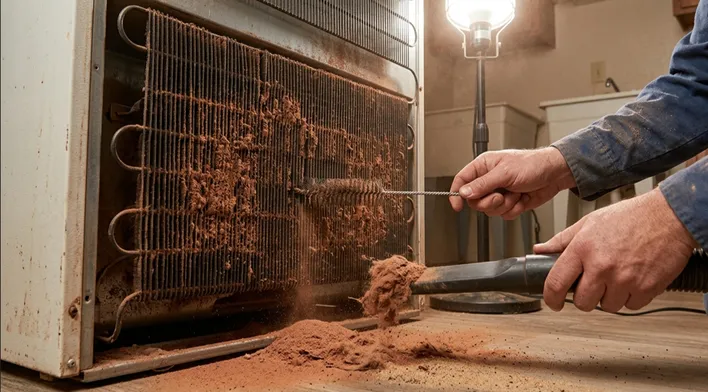
Rattling is the broadest category of refrigerator noise because it has the widest range of causes, from completely harmless to genuinely problematic.
Simple Rattles: Check These First
Before assuming something is mechanically wrong, rule out the obvious sources. Items stored on top of the refrigerator rattle when the compressor vibrates the cabinet. Bottles and jars inside the unit can knock against each other during compressor startups. The drain pan underneath the refrigerator — a removable plastic tray that collects condensation — frequently vibrates against its mounting brackets and is one of the most overlooked sources of refrigerator rattling. Pull it out, check for cracks, and slide it back in firmly.
Also, check whether the refrigerator is level. An unbalanced unit vibrates disproportionately when the compressor kicks on. Most refrigerators have adjustable front feet that can be raised or lowered to achieve level contact with the floor. A bubble level placed on top of the unit will confirm whether this is contributing to the rattle.
Condenser Fan Rattling
Loose condenser fan blades vibrating during operation are a common source of rattling from the back or bottom of the refrigerator. The condenser fan blade assembly can work loose from the motor shaft over time, particularly in older units, producing a rattling or wobbling sound that corresponds with fan rotation speed. This is audible as a rapid, repetitive rattle from the back of the unit during the cooling cycle. Tightening or replacing the fan blade assembly resolves this specific rattle quickly.
Water Line and Drain Pan Rattling
Water lines or drain pans shaking against the refrigerator frame are another common rattle source. The water supply line that feeds an ice maker or water dispenser runs along the back of the unit and is secured with clips. Over time, these clips loosen, the line develops slack, and it vibrates against the cabinet during operation. Repositioning and securing the waterline eliminates this rattle.
Compressor Mounting and Bracket Rattling
Compressor mounting brackets becoming worn or unstable can also cause rattling as the compressor’s vibration transfers to a loose bracket that amplifies the sound. This type of rattle is typically deeper and more resonant than a fan rattle, corresponds with the compressor cycle rather than the fan speed, and comes from the very bottom of the unit. Tightening compressor mounting hardware usually resolves it, though severely worn rubber compressor mounts occasionally need replacement.
Refrigerator Making a Grinding or Squealing Noise
Grinding and squealing are the two sounds that most reliably indicate mechanical wear rather than loose components, and both call for faster action than clicking or rattling.
Grinding from a refrigerator almost always indicates a fan motor—either the evaporator fan inside the freezer or the condenser fan at the back—with worn or failing bearings. A grinding motor does not resolve itself. It progressively worsens until the motor seizes, which then stops airflow and causes the refrigerator to stop cooling. The repair window between first noticing the grinding and motor failure can be as short as a few days.
Squealing from inside the freezer section almost always points to the evaporator fan motor bearing failing under load, often combined with or accelerated by ice contact on the blades. Squealing from the back of the unit is the condenser fan motor failing in the same way.
In both cases, the fix is motor replacement. Fan motors are typically $30 to $80 in parts, and labor adds $100 to $200, depending on access complexity. Catching the issue at the squealing stage instead of waiting until the motor seizes is the difference between a moderate repair and a refrigerator full of spoiled food.
How to Diagnose Your Refrigerator Noise: A Room-by-Room Approach
You do not need a technician to narrow down where a noise is coming from. This is how the professionals do it on the first visit.
Step one is location. Stand in front of the refrigerator and listen. Is the sound coming from the back, the bottom, inside the freezer section, or inside the fresh food section? Most mechanical sounds originate from the back and bottom, where the compressor and fans live. Sounds from inside the freezer point to the evaporator fan or ice maker. Sounds from inside the refrigerator section often come from loose shelving, bottles, or, rarely a failing temperature sensor.
Step two is timing. Does the noise happen constantly, or only when the compressor cycles on? A noise that comes and goes with the compressor cycle points to a compressor, relay, or condenser fan issue. A noise that runs continuously between compressor cycles often points to the evaporator fan, which runs almost constantly to circulate air.
Step three is correlation. Has cooling performance changed? If the refrigerator is getting louder, running constantly, leaking water, or not holding temperature, alongside the noise, the situation has moved from monitoring to immediate service territory. A noise without any change in cooling is usually a mechanical wear issue. A noise accompanied by warmth inside the unit is a cooling system issue that needs same-day attention.
Step four is the door test. Open the freezer door and listen. Open the fresh food door and listen. This changes airflow dynamics and can reveal or amplify the source, particularly for evaporator fan issues.
Refrigerator Noise Diagnosis in Abilene, TX: What West Texas Adds to the Equation
If you live in Abilene or anywhere in Taylor County, your refrigerator is operating under conditions that accelerate the failure timeline of every component mentioned in this guide.
Abilene’s summer heat regularly exceeds 100 degrees Fahrenheit. During June, July, and August, your refrigerator’s compressor runs at a duty cycle that the manufacturer did not design as a continuous operating condition. This sustained workload accelerates start relay wear, stresses compressor motor windings, and forces condenser fans to run harder and longer than their design specifications assume.
Abilene’s airborne dust—particularly in West Abilene neighborhoods like Westwood, Richland, and Fairway Oaks, which sit directly in prevailing wind paths—coats condenser coils with an insulating layer of debris that dramatically reduces heat dissipation. A refrigerator in Abilene that has not had its condenser coils cleaned in a year is running significantly harder than it needs to be, and the louder hum you may have started noticing is often the first audible sign of that strain.
The combination of heat and coil contamination is the leading accelerator of compressor failure in Abilene refrigerators, and it is almost entirely preventable with cleaning twice a year rather than the annual schedule most manuals suggest.
When to Call a Technician vs. When to Wait
Here is the honest breakdown that the professionals use.
You can monitor and investigate yourself when the noise is new, but the refrigerator is maintaining temperature, the sound appears to come from loose items or the drain pan, the clicking follows a single-event pattern rather than a repeating cycle, or the hum is only slightly louder than before without other symptoms.
You need a technician when clicking repeats every few minutes and the refrigerator is not cooling; humming is constant and the unit is running without cycling off; any grinding or squealing is present regardless of cooling status; the noise began alongside a temperature change inside the unit; or a new relay did not stop the clicking within the first hour of operation.
A specialist can diagnose the problem and advise whether a repair is feasible or if the entire refrigerator needs to be replaced, as compressor repairs can be very expensive. Knowing which category your situation falls into before calling saves time, sets accurate expectations, and ensures you are not replacing a $20 relay when the compressor needs attention or paying for a compressor diagnosis when the relay was the issue all along.
Hearing Something Unusual from Your Refrigerator in Abilene, TX?
If your refrigerator is clicking, humming, rattling, or grinding in ways that did not exist a few weeks ago, Falcon Appliance Services sends certified technicians to your door the same day across Abilene and Taylor County. We diagnose the exact source of the noise, give you a written estimate before any repair begins, and carry the parts to fix the most common refrigerator failures in a single visit.
We service all major brands—Whirlpool, Samsung, LG, GE, Maytag, Frigidaire, KitchenAid, Bosch, Sub-Zero, and more—with a parts and labor warranty on every repair.
Call us at (325) 399-6710 or visit falconapplianceservices.com to schedule your service. No hidden fees. No unnecessary part replacements. Just honest refrigerator repair from people who actually know Abilene.