
Your refrigerator compressor is failing if you notice unusual clicking or buzzing sounds, the interior is warmer than it should be, or your energy bills have crept up without explanation. These are not random quirks you can ignore. The compressor is the core of your refrigerator’s cooling system, and once it starts struggling, every hour you wait puts your groceries at risk and your repair bill in jeopardy.
At Falcon Appliance Services, we see compressor-related calls every week right here in Abilene, TX. West Texas heat pushes refrigerators harder than most climates, and that added strain means compressors in our area wear out faster than manufacturers often anticipate. This guide will walk you through exactly what a failing compressor looks like, what it costs to fix, and how to decide whether repair or replacement makes more financial sense.
What Does a Refrigerator Compressor Actually Do?
Before spotting the warning signs, it helps to understand the job the compressor performs. Think of it as the heart of your refrigerator. It draws in low-pressure refrigerant gas from the evaporator coils, compresses it into a high-pressure state, and pushes it through the condenser coils. That process releases heat to the outside and keeps the inside of your fridge consistently cold.
When the compressor is healthy, the whole refrigeration cycle runs quietly in the background. Most homeowners barely notice it. When it begins to fail, the signals are hard to miss once you know what to look for.
Key components that work alongside the compressor include the condenser fan motor, the evaporator fan, the start relay, the thermostat, and the condenser coils. A problem with any of these can mimic compressor failure, which is exactly why professional diagnosis matters so much before spending money on repairs.
8 Warning Signs Your Refrigerator Compressor Is Failing
1. Strange or Loud Noises Coming from the Back of the Fridge
A healthy compressor produces a low, steady hum that fades into the background. When the compressor begins to struggle, that familiar hum turns into something you actually notice. You might hear loud buzzing, hard clicking every few minutes, rattling, or even a knocking sound when the unit cycles on or off.
The clicking pattern is especially telling. If you hear a click, then silence, then another click repeating itself without the compressor ever fully running, that is a strong sign that the start relay or the compressor itself is failing. The start relay is a small, inexpensive component that sends power to the compressor at the start of each cooling cycle. A bad relay is sometimes mistaken for a failed compressor, and replacing it is far cheaper. A technician can test this quickly.
If the noise persists after the relay is checked, the compressor itself is likely the source.
2. The Interior Is Not as Cold as It Should Be
This is usually the sign that brings homeowners to the phone. If your produce is wilting faster than it should, your dairy is spoiling before the expiration date, or your ice cream is softening in the freezer, your refrigerator is not maintaining the correct temperature.
Safe refrigerator temperature sits between 35 and 38 degrees Fahrenheit, and freezer temperature should stay at or below 0 degrees Fahrenheit. A failing compressor cannot sustain these ranges because it is no longer pressurizing refrigerant effectively. Food stored in the door, which is always slightly warmer, will show the effects first.
One thing to check before calling: make sure the condenser coils on the back or bottom of your refrigerator are not caked in dust. Dirty condenser coils restrict heat dissipation and can cause cooling problems that look exactly like compressor failure. If cleaning the coils does not restore normal temperatures within a few hours, the compressor needs to be evaluated.
3. The Compressor Runs Constantly Without Shutting Off
Your refrigerator compressor is not supposed to run all day. Under normal conditions, it cycles on for a period, brings the interior to the set temperature, and then shuts off. This on-and-off pattern repeats throughout the day, usually running somewhere between 30 and 50 percent of the time, depending on how often the door is opened.
If you notice the compressor is running nonstop without cycling off, it means the unit can no longer reach its target temperature. The compressor keeps trying and keeps failing. Continuous operation puts massive strain on the motor and accelerates wear, which means waiting to address this problem turns a repair situation into a replacement situation.
4. The compressor is short-cycling.
Short cycling is the opposite problem. Instead of running too long, the compressor starts up and shuts off within seconds, over and over again. You might hear it attempt to start, fail, and click off, then try again a few minutes later.
Short cycling is hard on every component in the sealed system. It creates heat surges, stresses the start relay, and can cause the compressor motor windings to burn out. The underlying cause could be the start relay, a refrigerant issue, or a failing compressor motor. Either way, this pattern needs professional diagnosis fast.
5. The Back of the Fridge Is Excessively Hot
Some warmth at the back of the refrigerator is completely normal. The condenser coils are designed to release heat as part of the cooling cycle, so you will always feel some warmth when you place your hand near the lower rear of the unit.
What is not normal is a back panel that is too hot to comfortably touch or heat that radiates strongly from the compressor area. Excessive heat typically indicates one of three things: the condenser fan is not running and heat is building up instead of being dispersed, the condenser coils are severely dirty, or the compressor itself is overheating due to internal mechanical failure.
In Abilene summers, where kitchen temperatures can already be elevated, this problem compounds quickly. An overheating compressor in a hot kitchen is one of the most common service calls we handle from May through September.
6. Your Circuit Breaker Trips When the Fridge Runs
A compressor in the early stages of electrical failure draws far more current than it should. That electrical overload can trip your home’s circuit breaker, typically at the moment the compressor tries to start a cooling cycle.
If you reset the breaker and it trips again as soon as the refrigerator is plugged back in, do not keep resetting it. Unplug the appliance and call a technician immediately. Repeated electrical surges from a failing compressor can cause damage to the control board and other components, and in rare cases, overheated wiring creates a fire risk. This is one situation where waiting is genuinely not safe.
7. The Freezer Works, but the Refrigerator Section Does Not Cool
This is a symptom that confuses a lot of homeowners. If your freezer is maintaining temperature but the fresh food section feels warm, many people assume the problem is a damper or an airflow issue rather than the compressor.
In some cases, that is true. A stuck damper door, a failed evaporator fan, or frost buildup on the evaporator coils can block cold air from reaching the refrigerator section while the freezer stays cold. However, a partially failing compressor can produce this same pattern. It generates just enough cooling to maintain the freezer but cannot push sufficient refrigerant through the full system to cool the fresh food compartment.
A technician with proper diagnostic tools can differentiate between these causes in a single visit. Guessing and replacing parts without a proper diagnosis is how repair bills balloon unnecessarily.
8. Unusually High Electricity Bills
A struggling compressor works harder and draws more power than a healthy one. If your electricity bill has increased noticeably over the past few months and you have not changed any other habits, your refrigerator may be the reason.
This sign is easy to miss on its own. But pair rising utility costs with any of the symptoms above, and you have a strong case for a compressor inspection. EPA-certified technicians can use a multimeter and pressure gauges to test compressor performance and refrigerant pressure, giving you a clear picture of what is actually happening inside the sealed system.
What Causes Refrigerator Compressor Failure?
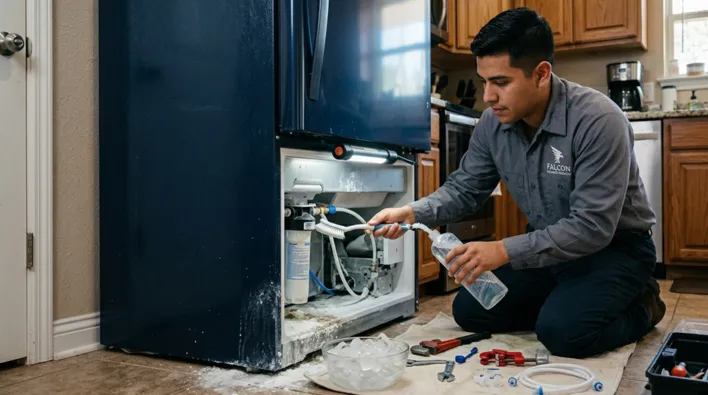
Understanding the root cause helps you make smarter decisions about repair versus replacement. The most common causes include:
Age and normal wear. Most compressors are built to last between 10 and 15 years. Once your refrigerator passes the 10-year mark, compressor-related problems become much more likely. This does not mean an aging refrigerator is always worth replacing, but age should factor into your cost-benefit calculation.
Dirty condenser coils. This is one of the most preventable causes. When condenser coils are coated in dust and pet hair, they cannot release heat efficiently. The compressor overworks to compensate and eventually burns out ahead of schedule. Cleaning the coils twice a year adds years to your compressor’s life.
Refrigerant leaks. The refrigerant in your sealed system should never decrease over time under normal conditions. If refrigerant leaks, the compressor has to work much harder to achieve the same cooling effect. Over time, operating with low refrigerant levels causes the compressor motor to overheat and fail. Refrigerant handling requires EPA Section 608 certification, which is why this repair is strictly for licensed technicians.
Power surges and voltage fluctuations. Electrical spikes from storms or grid instability can damage the compressor motor windings and the start relay. Using a surge protector rated for large appliances is a simple preventive measure worth considering, especially in areas with aging electrical infrastructure.
Blocked condenser fan. If something obstructs the fan that moves air across the condenser coils, heat cannot escape, and the compressor overheats. This is why refrigerators need adequate clearance on all sides, typically at least an inch on each side and several inches at the back.
Manufacturing defects. Some brands and model lines have a documented history of premature compressor failure. If your refrigerator is only four or five years old and the compressor has already failed, it may be worth checking whether your brand and model are subject to a recall or extended warranty program before paying for repairs out of pocket.
Refrigerator Compressor Repair and Replacement Costs in 2025
Cost is where the conversation gets complicated, and it is often the deciding factor in whether homeowners choose to repair or replace it. Here is a realistic breakdown.
Starting relay replacement is the least expensive compressor-related fix. The part itself typically costs between $10 and $50, and labor is minimal since the relay simply plugs into the compressor. Total cost usually falls between $75 and $150. If a bad relay was mimicking compressor failure, this repair restores your refrigerator completely.
Refrigerant recharge and leak repair costs vary based on where the leak is located and how much refrigerant needs to be added. In most cases, expect to spend between $200 and $400 for leak detection, sealing, and refrigerant recharge.
Compressor replacement is the most expensive repair on the list. Labor alone is significant because the work requires evacuating and recharging the refrigerant, and in some models, the repair involves welding on the sealed system. Total costs, including the compressor part and labor, typically range from $500 to $1,200, depending on the brand and model. High-end refrigerators from brands like Sub-Zero or Viking may run higher.
Full refrigerator replacement averages around $1,000 to $1,500 for a standard model and considerably more for premium brands, built-in units, or counter-depth configurations.
The 50 Percent Rule
A widely used guideline in the appliance repair industry suggests this: if the repair cost exceeds 50 percent of the cost of a new comparable refrigerator, replacement is usually the smarter financial decision, especially if the unit is already over seven years old. But this is a general rule, not a universal one. A 4-year-old French-door refrigerator with a $700 compressor repair bill is almost certainly worth fixing. A 13-year-old top-freezer refrigerator with the same bill probably is not.
When you call Falcon Appliance Services, we walk you through this calculation honestly. We have no interest in recommending a repair that does not make financial sense for your household.
Can you diagnose or fix a compressor yourself?
The honest answer is no, not safely. The compressor is part of a sealed refrigerant system. Refrigerants used in modern refrigerators, such as R134a and R600a, require EPA Section 608 certification to legally purchase and handle. Releasing refrigerant into the atmosphere is both an environmental violation and a health risk. Some refrigerant gases are also mildly flammable.
Beyond the refrigerant issue, electrical diagnosis of a compressor requires a multimeter and knowledge of how to test windings and capacitors safely. Misdiagnosis leads to buying parts that do not solve the problem and spending money that cannot be recovered.
There is one thing you can do at home before calling a technician: remove the access panel on the back or bottom of your refrigerator and gently shake the start relay. If it rattles, the relay is almost certainly defective and needs replacement. Replacing a start relay is a straightforward task that does not involve refrigerant. If that replacement does not solve the problem, the compressor itself needs professional evaluation.
When Should You Call a Technician? Right Now, If You See These Signs
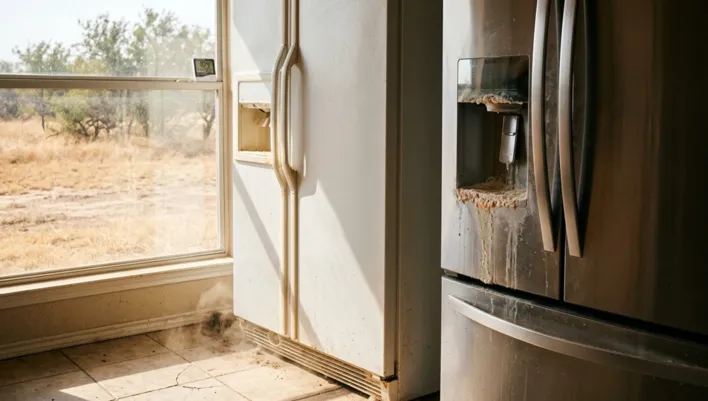
Do not wait if any of the following are happening:
Your refrigerator interior has been warm for more than 24 hours, which means food safety is actively at risk. Bacteria in meat, dairy, and cooked leftovers multiply rapidly above 40 degrees Fahrenheit.
Your circuit breaker is tripping repeatedly when the fridge cycles on. This is a safety issue, not just an appliance issue.
You smell something unusual near the refrigerator, whether it is a chemical odor suggesting a refrigerant leak or a burning smell suggesting electrical damage.
The compressor has gone completely silent, and the interior is warming. A totally silent compressor that used to hum means either the unit has stopped trying to run or has already seized up.
The longer these situations go unaddressed, the more likely other components in the sealed system are to be damaged by the failing compressor. A problem that starts as a compressor repair can turn into a need for a full evaporator replacement if refrigerant contamination spreads through the system.
How to Extend Your Compressor’s Life Going Forward
Once your compressor is repaired or replaced, a few simple habits keep it running longer.
Clean the condenser coils every six months. Pull your refrigerator away from the wall and vacuum the coils with a brush attachment. This single habit prevents more compressor failures than any other maintenance task.
Make sure the condenser fan area is not blocked. Do not push the refrigerator flush against the wall. Give it breathing room on all sides.
Check door gaskets twice a year. A worn door gasket that no longer seals correctly forces the compressor to run more often than it should. Press a piece of paper in the door and close it. If the paper slides out easily, the gasket needs to be replaced.
Consider a surge protector for your refrigerator, especially in older homes where power fluctuations are more common during storms.
Keep the refrigerator reasonably full but not overpacked. A refrigerator that is too empty has less thermal mass to maintain temperature between cycles, which increases compressor cycling. One that is overpacked restricts airflow and causes the compressor to work harder.
Frequently Asked Questions
How long should a refrigerator compressor last? Most compressors are designed to last between 10 and 15 years under normal use. Regular maintenance, including coil cleaning and gasket inspection, can help reach the high end of that range.
Is it worth replacing the compressor on an older refrigerator? It depends on the refrigerator’s age, brand, and the repair cost relative to the replacement cost. As a general guideline, if the refrigerator is under eight years old and the repair cost is below half the replacement cost, repair is usually worth it.
Can a refrigerator run with a bad compressor? A partially failing compressor may keep the unit running but with reduced cooling efficiency. A completely failed compressor means the refrigerator cannot cool at all. Either way, the problem needs to be addressed to protect food and prevent further damage to the sealed system.
How do I know if it is the compressor or just the start relay? A technician can test both with a multimeter in a single visit. At home, you can remove the starter relay and shake it. A rattling relay is defective and is often the actual culprit, even when the symptoms point to the compressor.
Does Texas heat affect refrigerator compressors more? Yes. High ambient temperatures force compressors to run longer and work harder to maintain safe interior temperatures. This is especially true in Abilene summers, and it is why we recommend more frequent coil cleaning for households in our area.
Professional Refrigerator Repair in Abilene, TX
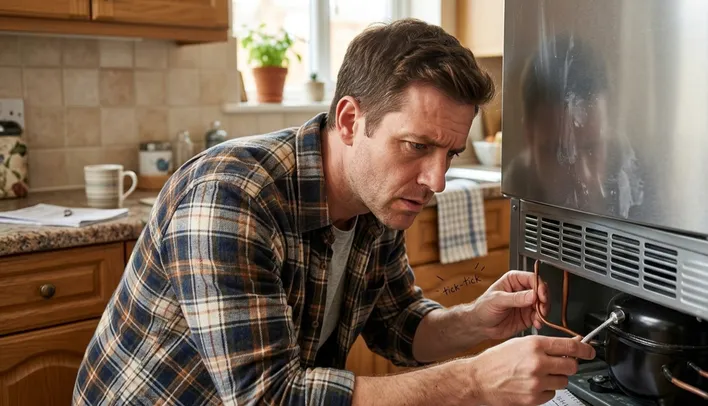
If you are seeing any of these warning signs, Falcon Appliance Services is ready to help. Our licensed and insured technicians serve Abilene and the surrounding communities, including North Abilene, South Abilene, Wylie, Elmwood, Potosi, Buffalo Gap, Chimney Rock, and West Abilene. We arrive equipped for same-day diagnosis, carry common parts on the vehicle, and give you a transparent estimate before any repair begins.
We back every repair with a warranty on both parts and labor, because a repair that does not last is not a repair at all.
Call us at (325) 399-6710 any time. We are available 24/7 for emergency situations where food spoilage is an immediate concern.
Falcon Appliance Services proudly serves Abilene, TX, and the surrounding Big Country communities. Licensed, insured, and committed to honest appliance repair.