
A failing refrigerator door gasket is quietly draining your wallet right now. That thin strip of rubber running around the edge of your fridge door is responsible for keeping cold air in and warm air out, and the moment it loses its grip, your refrigerator stops working efficiently. Most homeowners brush it off as a minor cosmetic issue. It is anything but. A compromised door seal forces your compressor to run far longer than it was designed to, accelerating wear and pushing up your monthly electricity bill at the same time.
The good news is that testing a refrigerator door gasket takes less than two minutes and requires nothing more than a piece of paper. Fixing it, in most cases, costs a fraction of what a compressor replacement would run you.
Recognising This guide walks you through exactly what a door gasket does, how to test whether yours is failing, what warning signs to watch for, and why acting quickly protects the most expensive component inside your refrigerator.
What Is a Refrigerator Door Gasket and What Does It Actually Do?
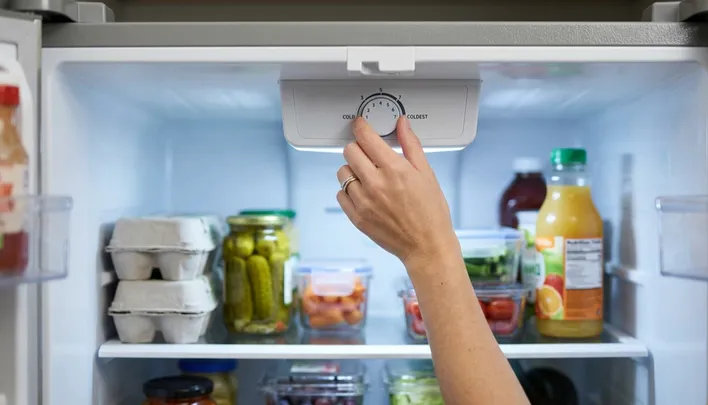
The door gasket is the magnetic rubber seal that lines the full perimeter of your refrigerator and freezer doors. Its job is to create an airtight contact between the door and the cabinet frame every single time the door closes.
Inside that rubber seal sits a flexible magnetic strip. The magnetism creates a firm, consistent closure without requiring you to push the door hard. When everything is working correctly, the gasket compresses evenly against the frame, trapping the cold air inside and blocking warm, humid room air from sneaking in.
Over time, the rubber degrades. Heat exposure makes it brittle. Food spills collect in the folds and prevent full contact. The magnetic strip loses strength. The result is small but persistent gaps through which warm air continuously enters, and cold air leaks out. Your refrigerator registers the temperature rise, and the compressor kicks on to correct it. The problem is that it can never fully correct it because the warm air keeps coming. The compressor runs and runs, wearing down components that were designed to cycle on and off throughout the day.
Warning Signs Your Refrigerator Door Gasket Is Failing
Your refrigerator will give you several signals before the gasket fails. Recognising these early saves you from a much more expensive repair down the line.
Condensation or frost forming around the door frame. When warm, humid air repeatedly enters the cold cabinet, moisture accumulates on the interior surfaces near the door. You may notice water pooling on the shelf closest to the door or frost building up around the door edges, particularly on the freezer side.
The refrigerator runs almost constantly. A properly functioning refrigerator cycles on and off at regular intervals. If you notice the compressor humming nearly without interruption, your cooling system is struggling to reach its target temperature. A leaking door seal is one of the most common causes of this pattern.
Food spoiling faster than usual. Inconsistent internal temperatures affect how long perishables stay fresh. If your produce is wilting early or dairy products are going off before their use-by dates, temperature instability from a leaking seal may be the reason.
Visible cracks, tears, or hardening of the rubber. Pull the door open and run your fingers along the entire gasket. Healthy rubber should feel soft and slightly spongy. If sections feel stiff, brittle, or have visible cracks and tears, the seal has already deteriorated past the point where cleaning alone will help.
Your electricity bill has crept up without explanation. A refrigerator running continuously consumes significantly more power than one that cycles normally. If your energy bill has risen and nothing else in your home has changed, your appliances, particularly your refrigerator, are worth inspecting.
Mould or mildew is growing in the gasket folds. The inner folds of a door gasket are a prime location for mould growth, especially when condensation is present. Mould not only creates hygiene concerns but also physically prevents the rubber from pressing flush against the frame.
How to Test a Refrigerator Door Gasket at Home
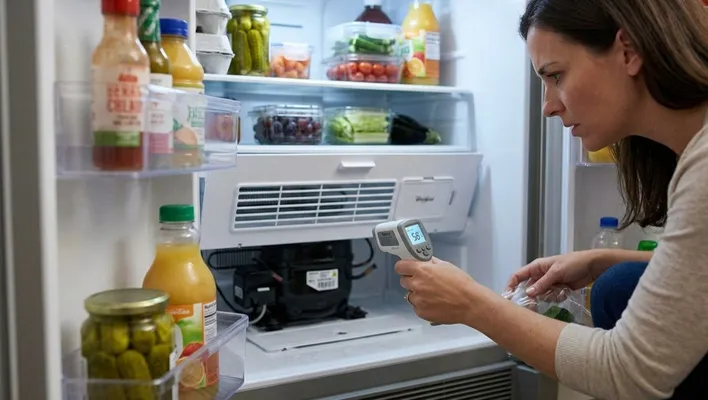
You do not need special equipment to get an accurate read on whether your gasket is sealing properly. These three methods are used by technicians and homeowners alike.
The Dollar Bill Test
This is the most widely used and reliable at-home test for gasket integrity.
Take a standard banknote and hold it against the door frame so that roughly half sits inside the refrigerator and half hangs out. Close the door fully on the bill. Now pull the bill outward with a slow, steady motion.
If you feel clear resistance, the gasket is gripping the paper as it should. If the bill slides out with little effort or falls out on its own, the gasket is not generating enough compression to form an airtight seal at that point.
The critical step most people skip is repeating this at every section of the door. Test both sides, the top, the bottom, and every corner. Gaskets fail in localised sections, and a single weak corner is enough to undermine the entire seal. Mark any problem spots with a small piece of tape before moving on so you can address them properly.
The Flashlight Test
Place a flashlight or your phone’s torch function inside the refrigerator and close the door. Darken the room as much as possible, then slowly move your gaze around the entire perimeter of the closed door from the outside.
Any point where light is visible is a gap in the seal. This method is particularly useful for spotting problems in corners, where the gasket tends to pull away from the door channel first.
The Visual and Touch Inspection
Open the door and examine the gasket closely across its full length. Look for sections where the rubber has pulled out of its retaining channel. Feel for areas that are noticeably harder than the rest. Check the folds and creases for mold growth or compacted food residue. Gently tug the gasket away from the frame at multiple points and see whether it snaps back firmly into position or has lost its elasticity.
A gasket that passes the visual test but fails the dollar bill test is usually one that has lost its magnetic strength or has warped slightly from prolonged heat exposure.
Why a Failing Gasket Is So Hard on Your Compressor
The compressor is the heart of your refrigerator’s cooling system. It circulates refrigerant through the evaporator coils, which absorb heat from inside the cabinet, and through the condenser coils, which release that heat to the surrounding room. It is the most mechanically complex and most expensive component in the appliance.
Under normal conditions, the compressor cycles on when the internal temperature rises above the set point, runs until the thermostat registers that the temperature has been restored, and then shuts off to rest. This on-off cycling is by design. Compressors are built to handle a defined number of cycles within a specific range of operating duration.
When a door gasket is leaking, warm air enters the cabinet continuously. The temperature never stabilizes. The compressor turns on and stays on, sometimes for hours at a stretch, sometimes without shutting off at all. This is called continuous operation, and it creates two serious problems.
First, it generates excess heat. Compressors produce heat as a byproduct of compression. Under normal cycling, that heat dissipates between cycles. Under continuous operation, it builds up around the motor windings and the start relay, degrading the insulation and mechanical components over months.
Second, it eliminates the rest period the compressor’s lubrication system depends on. Refrigerator compressors use oil to lubricate their internal moving parts. That oil needs the off-cycle to settle and redistribute properly. Without it, the internal components run dry and wear accelerates dramatically.
The downstream effects extend further. Warm, humid air entering the cabinet condenses on the evaporator coils, leading to excessive frost buildup. That frost insulates the coils, reducing their efficiency and forcing the defrost system to work harder and cycle more frequently than designed. Ice buildup in the freezer compartment can restrict airflow, damage the evaporator fan motor, and eventually cause the cooling system to fail even if the compressor itself is still functional.
What begins as a gasket replacement costing between $80 and $150 can quietly become a cascade into much larger problems. Compressor failures in refrigerators six to eight years old have been traced directly back to years of sealing neglect.
Can You Fix a Failing Gasket Without Replacing It?
Sometimes, yes. It depends entirely on why the gasket is failing.
If the problem is mold or food buildup, a thorough cleaning is often enough. Use a solution of warm water and mild dish soap, and work it into every fold of the gasket with a soft cloth or an old toothbrush. Rinse completely and dry the gasket before testing it again. Residue buildup is one of the most common causes of a door seal that appears worn but is actually still structurally sound.
If the gasket has flattened or warped from heat, you may be able to restore its shape. Remove the gasket from the door channel and soak it in a basin of warm, not boiling, water for several minutes. The heat allows the rubber to relax and reform. Reinstall it while it is still warm and pliable, close the door, and let it cool in place overnight before testing.
If a section has pulled out of its mounting channel, warming the affected area with a hairdryer on a low setting makes the rubber pliable enough to press firmly back into the groove. This repair holds well when the underlying rubber is still in good condition.
If the gasket is cracked, torn, hardened throughout, or riddled with mold below the surface layer, cleaning and reshaping will not solve the problem. Full replacement is the right call.
When to Replace the Refrigerator Door Gasket
Replace the gasket when the dollar bill test fails at multiple points along the door, when visible cracking or tearing is present anywhere on the seal, when the rubber has hardened uniformly and no longer responds to warming, or when mold growth has penetrated below the surface and cleaning does not eliminate it.
Order a replacement gasket using your refrigerator’s model number, which you will find on a label inside the cabinet, typically on the upper side wall or the door jamb area. An exact model-specific gasket is essential. A gasket that is even slightly the wrong size will not compress properly against the frame regardless of how carefully it is installed.
Replacing a door gasket typically costs between $75 and $200, which makes it a straightforward, cost-effective repair compared to compressor work, which can range from $300 to $800. For most homeowners with a basic level of comfort around appliance maintenance, a gasket replacement is a manageable DIY task. The gasket typically snaps or slides into a retaining channel around the door perimeter and requires no specialised tools. Warming the new gasket in warm water before installation makes it significantly easier to seat at the corners.
What to Do If Your Fridge Has Been Running With a Bad Gasket for a Long Time
If you have noticed the warning signs for some time before addressing them, or if you only discovered the failing gasket because your refrigerator stopped cooling effectively, replacing the seal alone may not be enough.
Have a qualified appliance technician inspect the compressor and start relay. Listen for unusual sounds during operation, particularly grinding, clicking, or a compressor that hums loudly but fails to bring the temperature down. Check whether frost has built up on the back wall of the freezer compartment, which would indicate that the defrost system has been overwhelmed. If the evaporator fan is making noise or running sluggishly, it may have been damaged by ice accumulation.
Catching secondary damage early gives you the option of targeted repairs. Leaving it unaddressed often means a much larger bill later.
How to Extend the Life of Your Door Gasket
Maintenance is straightforward and takes only a few minutes every couple of months.
Clean the gasket regularly with mild soap and warm water, paying particular attention to the folded inner edges where food and moisture accumulate. After cleaning, apply a very thin layer of petroleum jelly to the rubber surface. This keeps the material supple and helps it maintain its flexibility through temperature changes.
Avoid using harsh chemical cleaners, bleach, or abrasive scrubbing pads on the gasket. These degrade the rubber and accelerate cracking.
Do not overload the door shelves with heavy condiment bottles and large containers. Excessive weight on the door strains the hinges over time, which can cause the door to hang unevenly and prevent the gasket from compressing uniformly across its full length.
If your refrigerator has adjustable legs, make sure the unit is slightly tilted toward the rear. This encourages the doors to swing closed naturally rather than hanging ajar, reducing the number of cycles where the gasket is only partially compressed.
Run the dollar bill test twice a year as part of your regular home maintenance routine. The few minutes it takes could save you hundreds.
Frequently Asked Questions
How long does a refrigerator door gasket typically last? Under normal use and with basic maintenance, a door gasket can last anywhere from five to ten years. Models that see heavy use, such as those opened frequently throughout the day, or gaskets that are never cleaned, will tend to fail earlier.
Is a refrigerator that runs constantly always a gasket problem? Not necessarily. Dirty condenser coils, a malfunctioning thermostat, a blocked defrost drain, or a low refrigerant charge can all cause a refrigerator to run without cycling off. However, a failing door gasket is one of the most common and easily confirmed causes, so it is always worth testing the seal first before investigating other components.
Can I use a gasket from a different brand or model? Only if the dimensions are an exact match, which is rare across brands. Using a gasket that is the wrong size or profile for your specific model will not seal correctly and may actually make the problem worse by creating new gaps at the corners. Always order by your refrigerator’s model number.
What brands are most affected by gasket failures? Gasket degradation affects every major brand over time, including Samsung, LG, Whirlpool, GE, Frigidaire, Bosch, and KitchenAid. The timeline and nature of failure vary by the materials used and how the appliance is maintained, not the brand itself.
Should I replace the freezer gasket at the same time? If your refrigerator and freezer are on the same unit and the freezer gasket is showing the same signs of wear, replacing both at the same time is practical. It saves a second service call and ensures both sections are operating at full efficiency simultaneously.
Final Lines
A refrigerator door gasket is one of those components that does critical work in complete silence until it stops doing it. The test takes two minutes. The fix is inexpensive. The alternative, a burned-out compressor and a refrigerator full of spoiled food, is not. If your fridge runs more than it should, if your energy bill has drifted upward, or if you simply cannot remember the last time you checked that rubber seal, today is the right time to grab a dollar bill and find out where you stand.
If the gasket has failed or you suspect more serious damage to the cooling system, having a professional technician look at the appliance is the fastest path to an accurate diagnosis and a real solution.